Learning from the Frontlines: Insights from the Louisiana Climate Donors Convening
Prime empowers donors to advance untapped climate solutions with speed and scale. We deploy catalytic capital alongside traditional grantmaking to mitigate global greenhouse gas emissions through early-stage technology innovation, while also building towards an equitable, sustainable, and resilient future. While our work anchors on resourcing high-impact climate solutions, we cannot do it without listening to and learning from the communities on the frontlines of climate change.
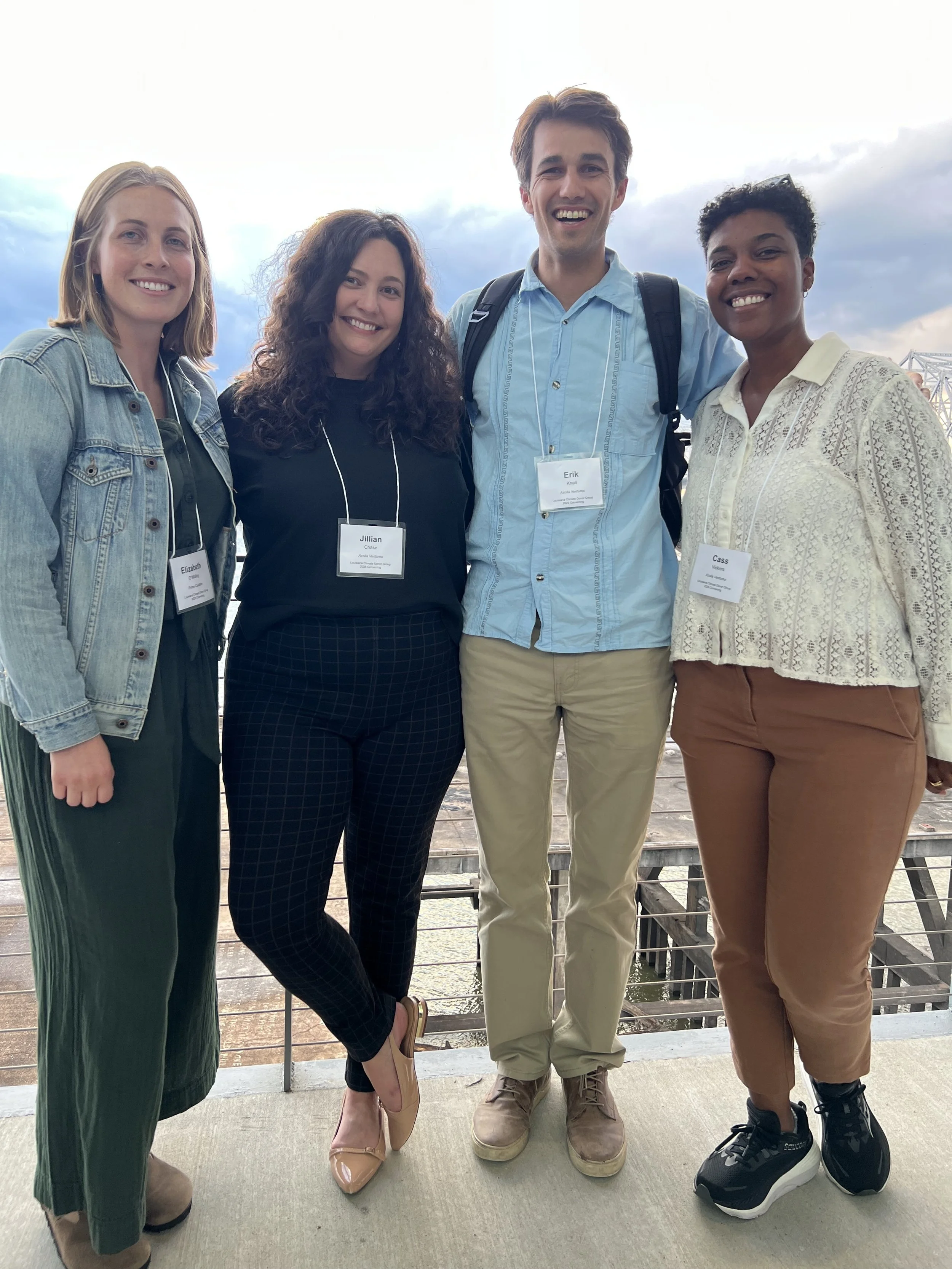
Ellie O’Malley of Prime Coalition, Jillian Chase, Eric Knoll, and Cass Vickers of Azolla Ventures at The Estuary at the Water Campus in Baton Rouge.
We were honored to have Ellie O’Malley of Prime’s Impact Team attend the 2025 Louisiana Climate Donors Group convening in Baton Rouge to support Prime’s deepening understanding of Louisiana’s climate challenges.
Louisiana and the Gulf Coast more broadly is a region experiencing multiple, overlapping climate challenges stemming from its immensely emission-intensive petrochemical industry, a deep history of injustice, and geographic vulnerabilities to the effects of climate change.
The convening brought together a variety of stakeholders across these issue areas to discuss today’s most pressing challenges in Louisiana and learn how local organizations are approaching them.
Inside the convening, topics spanned across impact areas, from shaping the political landscape for climate justice, the rise of AI data centers threatening health and electricity affordability, to the fight for renewables in a changing funding landscape. These issue areas became more salient on a tour of Baton Rouge where we learned from local graduate students building the knowledge base of present harms and risk factors as well as levers for community resilience in the Baton Rouge area, visited the local Electrical Training Alliance where students are equipped with skills needed for the renewables transition, our drive on the “Scenic Highway” highlighting just how deeply intertwined the petrochemical industry is in everyday life in Louisiana, and lastly to the LSU River Model where information needed for adaptation planning is gathered.

The LSU River Basin Model replicates the flow, water levels, and sediment transport of the Mississippi River.

A map of Louisiana pinpointing projects to support healthy river ecosystems and safety for nearby communities.
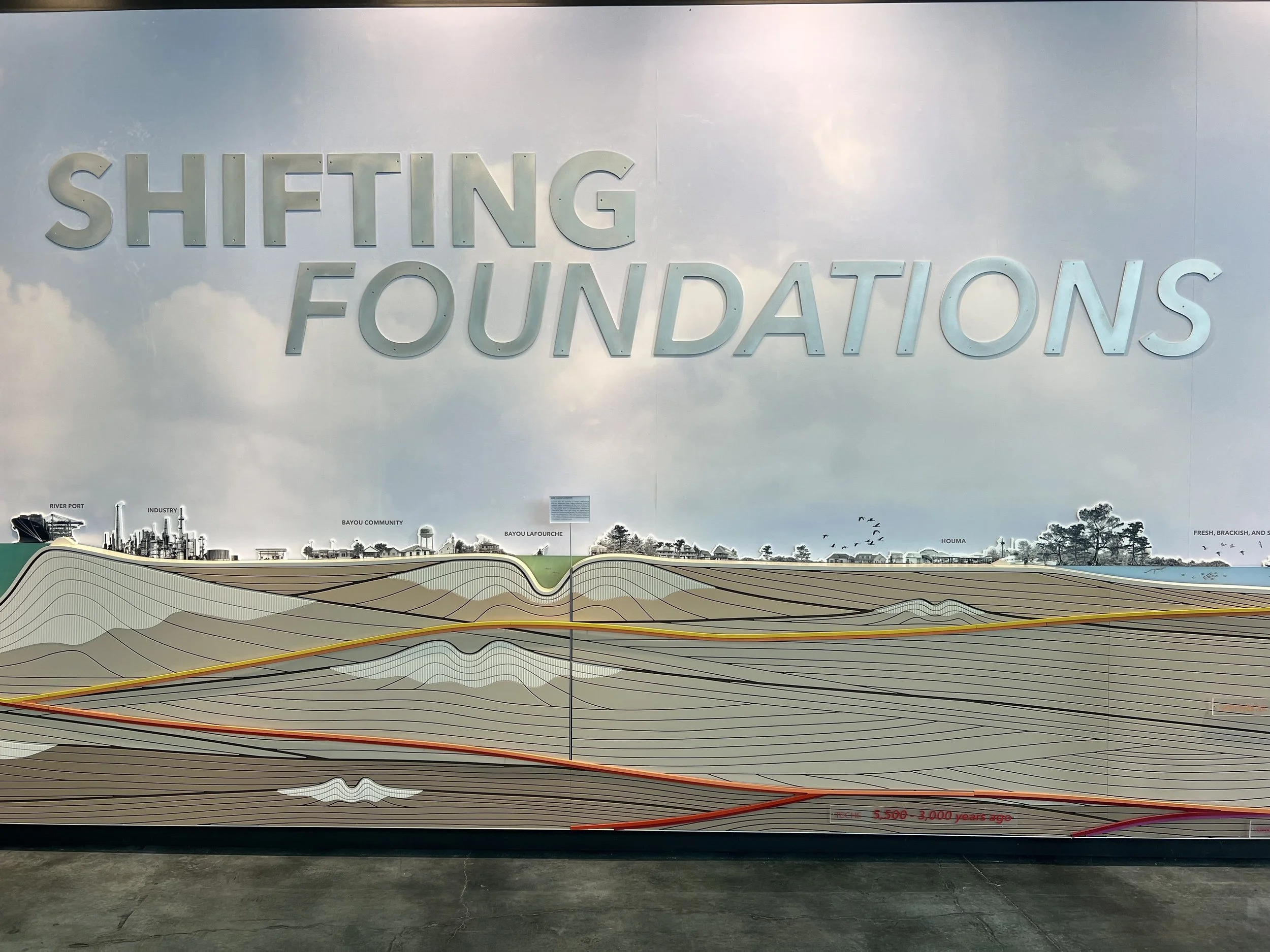
A diagram at LSU Water Campus illustrating the shifting pathways of Louisiana's waterways over time.
Across topics, it is evident that the effects of shifting government priorities are already slowing if not reversing progress on building a clean and safe economy, yet the urgency of the climate crisis only mounts. Leaders working on these issues emphasized that the way capital is mobilized matters just as much as how much is mobilized. A just transition requires reliable, long-term funding across sectors and approaches; enabling a multi-faceted approach allows for action on interconnected fronts to support both building a climate just future and addressing existing harms.
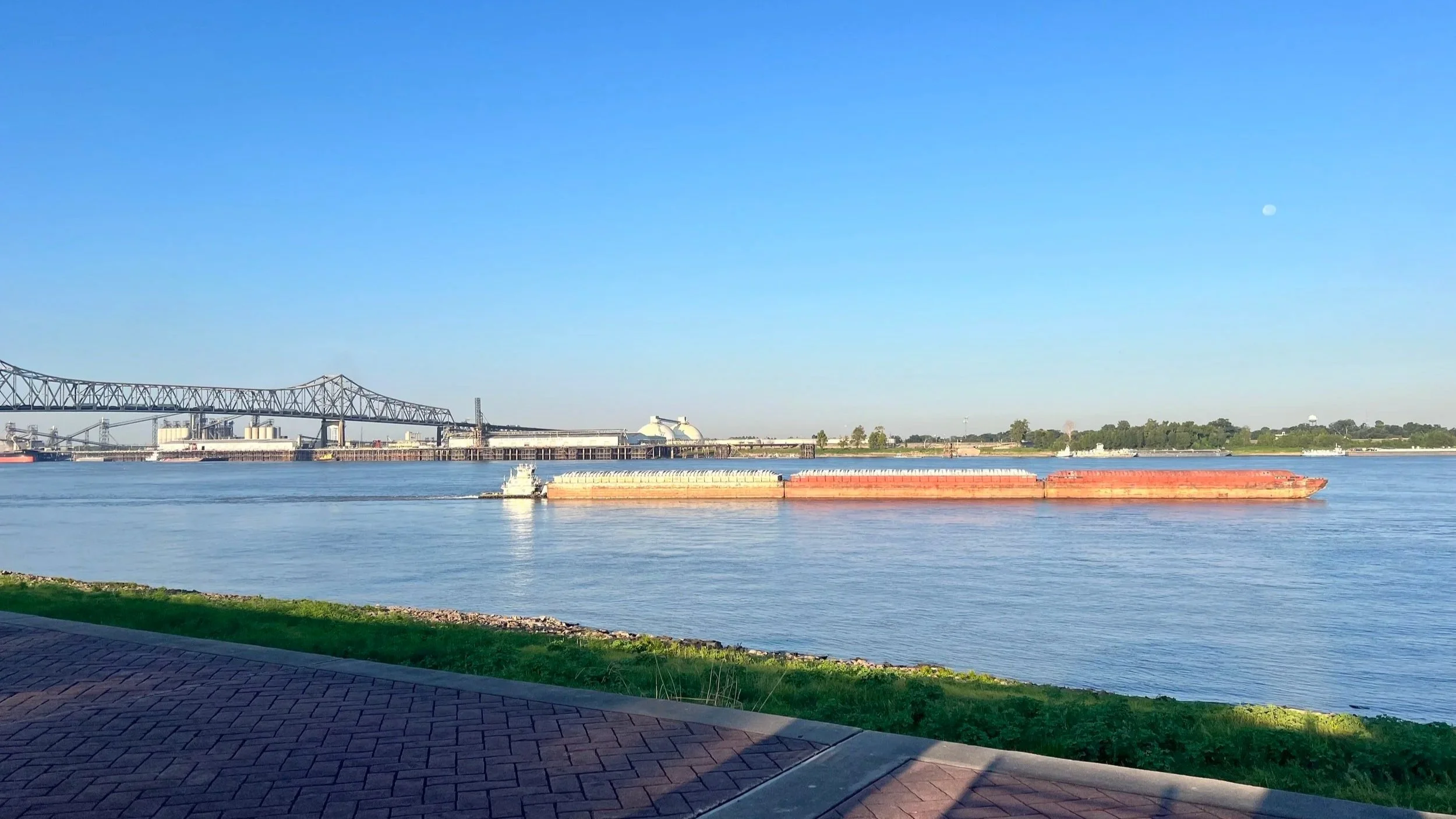
The view from downtown Baton Rouge overlooking Mississippi River and Port of Greater Baton Rouge.
We are immensely moved by the Louisiana Climate Donors Group and The 2030 Fund in their dedication to resourcing actors on the ground fighting for climate justice and grateful for their invitation to engage on frontline issues in Louisiana.