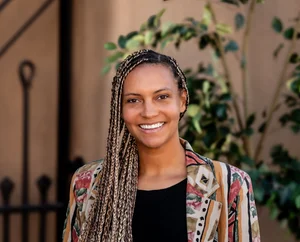
For one of our longtime philanthropic partners, Hanson Gong, climate philanthropy is about more than any one sector or solution. While he’s interested in areas like the circular economy, he focuses most on identifying leverage points where capital can have the greatest impact on the climate crisis overall.

At the heart of this approach is a bigger question Hanson is asking: How can we rethink how capital works to help address climate change and other systemic challenges?
Hanson explains it like this: “For me, this means reimagining how capital functions as a source of energy in the world.”
Hanson’s interest in this question is rooted in a lifelong appreciation for the natural world, shaped by his mother, time spent outdoors (often snowboarding), and an early love of reading and collecting National Geographic magazines.
As he’s explored impact investing over the years, including while in business school, he began to see how rethinking the role of capital could help advance climate solutions beyond what conventional finance can achieve alone.

Hanson’s photo of a birch forest deep in winter in Japan.
A different way to put capital to work
Hanson first encountered the idea of catalytic capital while in business school. He attended a lecture by a guest speaker who first compellingly introduced the concept to him, who happened to be Prime CEO and Founder, Sarah Kearney! After listening to Sarah Kearney explain how a relatively small shift in philanthropic practice could open up new possibilities for investment, the concept resonated with him. What seemed like a modest innovation had the potential to change how people think about the role of capital, moving beyond financial returns alone to help advance a greater purpose.
Hanson told Prime, “She was pioneering something that seemed like such a small innovation, but philosophically it would unlock new ways of seeing how capital might function in pursuit of something greater than returns.”
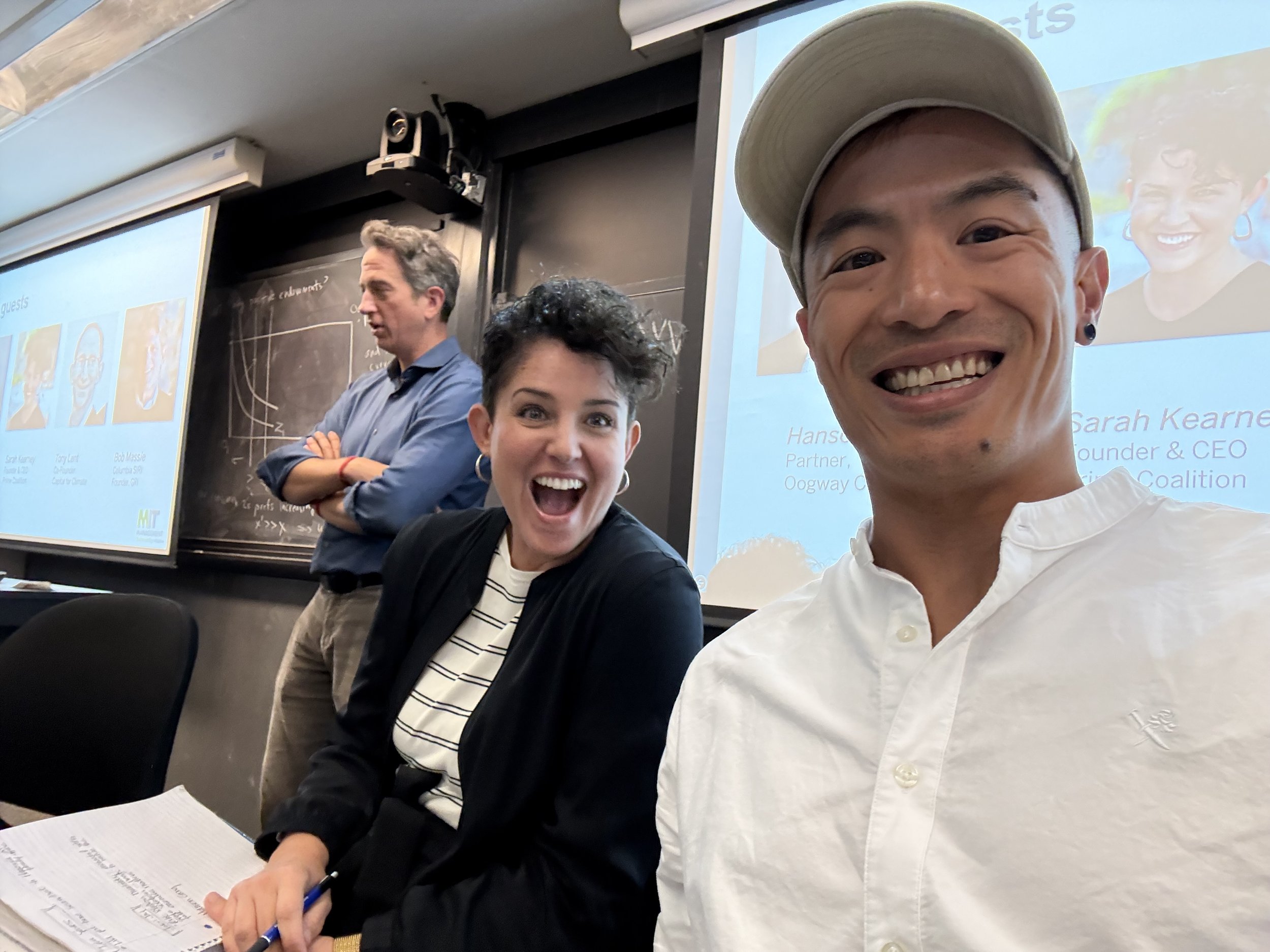
A photo of Sarah Kearney, Founder and CEO of Prime Coalition, and Hanson Gong at their most recent “Primeaversary” at MIT in October 2026.
Finding a partner in Prime
That early glimpse of catalytic capital’s potential motivated Hanson to explore impact investing and seek out fund managers committed to systems change. Through his connection to Prime, he learned about and was drawn to Azolla Ventures, one of our Prime-built funds addressing early-stage climate technology, which spun out in 2021.

Hanson says, “Azolla had an innovative multisleeve structure and mission-locked governance structure which continues to set itself apart from others.“ That approach offered a different way to align investment activity with a broader climate mission.
Over time, working with Prime has broadened Hanson’s understanding of the ways philanthropic capital can be deployed. It has also helped him place catalytic capital within his own systems-thinking framework.
When asked how partnering with Prime has helped him achieve his own impact investing goals, Hanson says, “It has broadened my own toolkit of capital deployment mechanisms, and I’ve been able to contextualize it within my own framework of systems thinking. Prime Coalition is the go-to organization for all catalytic capital and capital orchestration players.”
A photo of a recent National Geographic cover. Hanson’s love of collecting Nat Geo magazines goes back to childhood. These magazines remind him that impact investing goes beyond deploying capital and it’s important to remember the importance of communities and their stories.
The Next Generation of Fit-For-Purpose Capital
For Hanson, catalytic capital represents more than another tool for climate philanthropy. It is part of a wider evolution in how financial innovation can help address challenges that markets have yet to solve. He sees the next generation of climate finance emerging from new approaches built on the work of Prime and others, creating more effective ways to direct capital toward climate solutions.
His advice to fellow climate-conscious philanthropists who are interested in going beyond traditional grantmaking? “This was really a no-brainer— it’s the next wave of financial innovations built on top of Prime’s catalytic investing work that will hopefully bring us into the next generation of fit-for-purpose capital.”
If you want to learn more about partnering with Prime, contact partnerships@primecoalition.org.