How can philanthropy approach giving with an entrepreneurial or investor mindset?
For the McCance Foundation, the answer begins with how it thinks about the role of philanthropic capital. Across its four focus areas—medical research, local communities, poverty alleviation and economic mobility, and climate change—the Foundation looks for innovative, results-oriented approaches led by exceptional people. It also emphasizes flexible, uncomplicated funding that gives those leaders the freedom to pursue their most important work.
That philosophy has deep roots in the McCance family's approach to philanthropy.
Foundation founder Henry McCance has spoken extensively about bringing lessons from venture capital into philanthropy by doing things like backing entrepreneurial leaders, pursuing high-risk, high-reward opportunities, learning from failure, and helping successful ideas attract additional capital. Bridgespan's profile of Henry McCance describes his approach as that of an "active investor" or someone who works closely with the leaders he supports rather than simply providing financial support.
That philosophy also shapes the Foundation's approach to climate. Foundation trustee Elizabeth McCance, Henry’s daughter, who told the Environmental Defense Fund that “climate change is the largest threat of our time,” has described a theory of change centered on the private sector's role in solving climate change. Her work has included impact investing, engaging financial advisors on climate opportunities, and partnerships designed to help companies turn climate commitments into action.
For the McCance Foundation, partnering with Prime offers a way to put these philosophies into practice in climate by using flexible philanthropic capital to take risks that commercial investors cannot yet take, while drawing on Prime's expertise to identify where those risks can help move climate solutions toward scale.
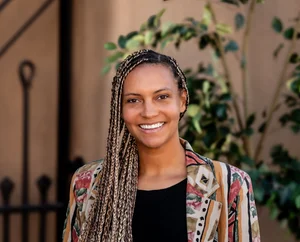
We asked Katie Cutler, Executive Director of the McCance Foundation, to share more about its approach to philanthropy, its partnership with Prime, and what it has learned about using philanthropic capital to unlock climate action. We invite you to read her responses below.
What should the greater Prime community know about McCance, and what are your key philanthropic themes or impact priorities?
Katie Cutler: The McCance Foundation is built around a simple conviction: we want our giving to be as thoughtful and well-informed as any other kind of investment. The Foundation prioritizes programs that are results-oriented, innovative, grounded in real research and evaluation, and run by top-notch leaders.
Our giving is organized around four priority areas, each with its own funding strategy.
The first is medical research, where we focus on supporting early-stage research on diseases that have directly impacted the McCance family. The second is local communities. We invest in the places that are significant to the McCance family, supporting the institutions and organizations that strengthen these communities. The third is poverty alleviation and economic mobility, where our strategy centers on achieving durable economic mobility and helping create real pathways out of poverty. The fourth is climate change, where our investment focus is on organizations that position business as a key lever for climate action. We believe the private sector has a critical role to play in addressing climate change, and we look for partners who are working to activate that role.
Across all four areas, what ties our approach together is a commitment to diligence. We want to know that the organizations we fund are asking hard questions about their own impact, and that our support is helping them do more of what's working. Just as important is how we give; we believe in a simple, unbureaucratic governance process that gets unrestricted capital into the hands of great leaders so they can execute on their most important work. This approach was shaped by one of the Foundation's founders, Henry McCance, who believes deeply in the venture capital model and in the power of entrepreneurial companies to accomplish great things. In that spirit, a major part of our giving program is backing extraordinary social entrepreneurs. Done well, this kind of support helps social entrepreneurial programs grow into stronger, more scalable organizations and leverages the returns of our initial investment many times over.
What led McCance to partner with Prime through multi-year core support, and how is Prime helping you advance your goals and strengthen your own approach to climate philanthropy?
Katie Cutler: Our decision to support Prime with multi-year, unrestricted core support was a direct expression of how we think about giving. We believe in simple, unbureaucratic governance and in getting flexible capital into the hands of great leaders, so they can execute their work. Prime’s model, of using catalytic capital to unlock early-stage climate technology, is exactly the kind of entrepreneurial, venture-style approach the McCance Foundation Board believes in. Giving Prime multi-year, unrestricted funding lets them do what they do best: make patient, long-horizon bets on the companies and technologies most likely to matter.
What do you see as the most meaningful outcomes we've achieved together? Is there a particular moment or milestone that stands out to you?
Katie Cutler: For us, the most meaningful outcome isn't any single milestone. It's the fact that the model itself is working. Watching philanthropic capital do exactly what it's supposed to do by taking on the risk that commercial capital won't touch and helping move promising climate technologies to the point where the private market can carry them forward is deeply gratifying to see play out across Prime's portfolio. We're proud, broadly and consistently, of the work Prime does and the discipline with which they do it. They have shown and continue to show that patient, catalytic capital, paired with real expertise, can move the needle on climate.
What has your journey with Prime taught you about catalytic capital, climate action, moving past conventional giving, or anything else that you'd pass on to a fellow philanthropist looking to deepen their impact?
Katie Cutler: Partnering with Prime has sharpened our own thinking. Climate is a complex, fast-moving field, and Prime brings deep, on-the-ground expertise in identifying where philanthropic capital can do something commercial capital can’t, filling early funding gaps before a technology is de-risked enough for the private market to take over. That expertise has helped us translate our belief that business is a key lever for climate action into a more concrete investment thesis. Our role isn't (and can’t be) to replace private capital, but to unlock it, and Prime is one of the best-positioned organizations we've found to do exactly that.
___________________________________________________________________________________________________________
We at Prime want to extend a huge thank you to Katie Cutler and everyone at the McCance Foundation for their partnership. The McCance Foundation's experience points to a broader opportunity for philanthropy. The question isn't only: What social change should we fund? It can also be: What role can philanthropy play that no other source of capital can?
For McCance, the answer is clear: take thoughtful risks, back exceptional leaders, provide flexible support, and help promising ideas reach the point where other capital can follow.
We are dedicated to working with philanthropists of all sizes and experience levels with catalytic capital, and we are ready to help you knock down any barriers that may be holding you back from having an outsized impact for climate.