Trellis Climate’s New Investments Highlight Catalytic Capital’s Role in Today’s Climate Finance Landscape
Since its launch in spring 2024, Trellis Climate has been on a mission to support climate technologies building first-of-a-kind (FOAK) projects. Over the last few years, the funding gap faced by climate companies in the early commercialization stage has been well documented (see e.g., S2G, Prime) and often discussed (see e.g., CTVC NYCW roundup, Node SFCW FOAK event), yet limited capital has moved to fill the void. The core of the issue is a mismatch between the risk-return profile of FOAK projects and what is required by venture capital and project finance to invest. Broader market trends have also made the funding gap more acute. Significant uncertainty has emerged for much of the government funding for companies at this stage, and venture funding for climate tech has slowed significantly since its 2021 peak. Amid these headwinds, Trellis Climate is stepping in with catalytic capital to help advance promising high-impact technologies that are working to bridge this funding gap.
Amidst the current landscape, Trellis Climate is thrilled to announce that it made its first two catalytic investments in climate companies building FOAK projects: Nitricity, a company producing low-emission fertilizer, and Tandem PV, a company making next generation, highly efficient solar panels.
Nitricity
Globally, synthetic nitrogen-based fertilizers account for over 1 GT of CO2e emissions each year, or about 2% of annual global emissions. This includes emissions from producing and transporting the fertilizers, as well as the evolution of N2O, a powerful greenhouse gas, when nitrogen-based fertilizers are applied to crops. Identifying greener alternatives to traditional fertilizers is essential for limiting global warming and ensuring food security.
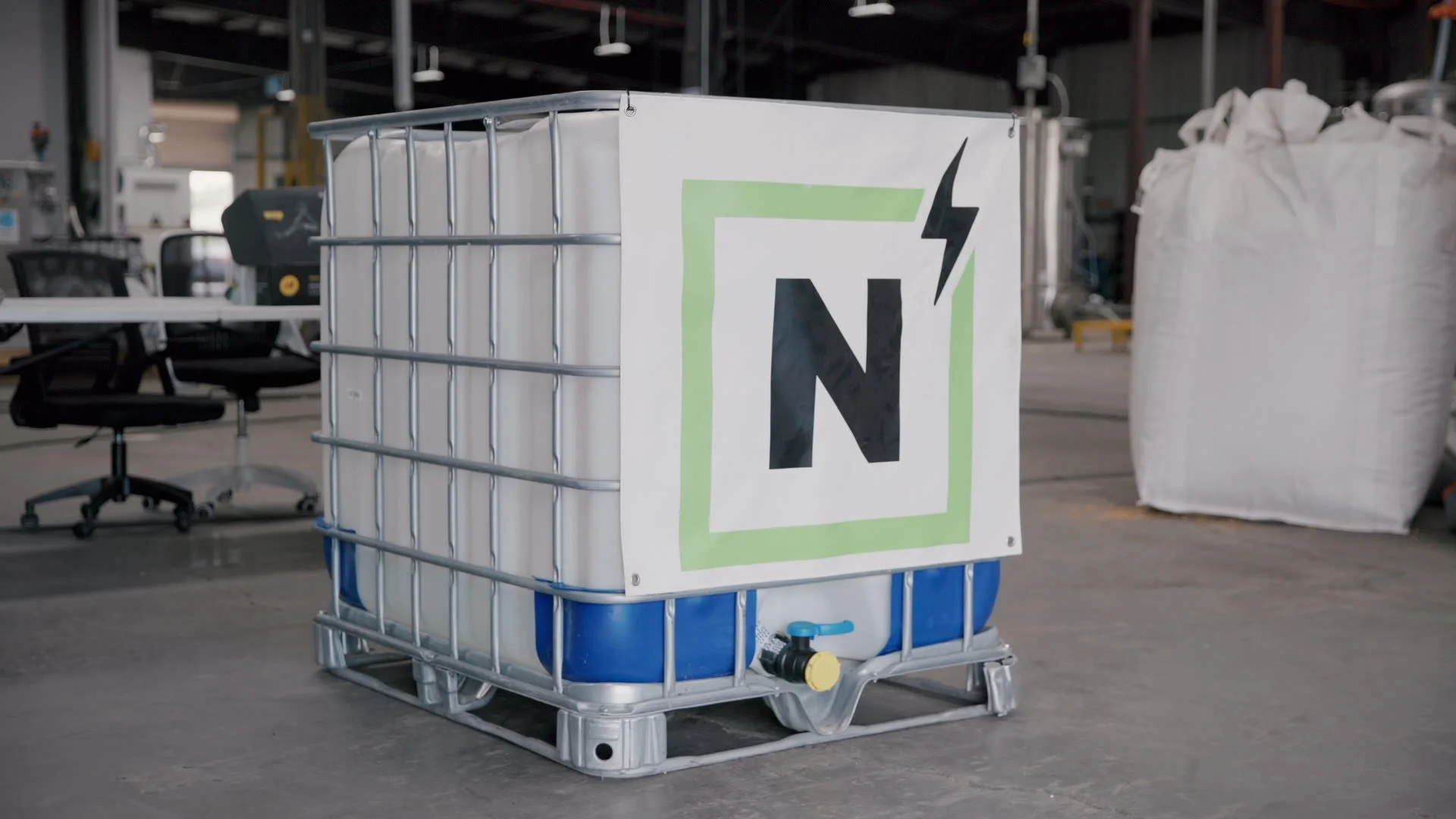
All photos from Nitricity’s new facility are courtesy of Pique Action.
Nitricity’s solution uses a novel process that involves superheating air to produce nitrate-based fertilizers at a distributed, regional scale using inexpensive waste biomass (i.e., not purpose-grown biomass). Its product has significantly lower emissions than traditional ammonia-based fertilizers produced through the industrial standard Haber-Bosch process, as well as other fertilizers used in organic and non-organic applications. Nitricity’s nitrate-based fertilizer chemistry also minimizes on-field evolution of N2O post-application compared to ammonia-based alternatives, enabling even greater emissions reductions compared to traditional fertilizer chemistries.


Nitricity is building its first-of-a-kind commercial demonstration plant in California’s Central Valley to fulfill customer orders and continue building demand for its product. This scale-up builds upon the company’s experience deploying several pilots and a demonstration plant, and the facility will help the company achieve critical milestones to support its continued growth and climate impact.
Trellis invested in Nitricity alongside other catalytic, corporate venture, and strategic capital providers that collectively contributed $10M of project funding. Trellis’ diligence concluded that, in addition to meaningful greenhouse gas emissions reduction potential, Nitricity’s use of agricultural waste to produce its fertilizer offers several environmental co-benefits compared to traditional fertilizers, including reduced risk of damage to water bodies that are downstream of agricultural areas. Our additionality diligence concluded Trellis’ funding filled an immediate capital gap for Nitricity to build the plant and helped accelerate key hires for plant development.
Tandem PV
The International Energy Agency’s (IEA) Net Zero by 2050 scenario indicates that 4 terawatts (TW) of new solar capacity must be built by 2030 to be on track to decarbonize by mid-century. In the U.S., solar generation is projected to increase to meet climate targets and growing electricity demand, and experts expect decarbonization to be accelerated through domestic panel manufacturing. Today, the dominant material for solar panels is crystalline silicon, but this technology is approaching its theoretical maximum efficiency, which may hinder the speed of deployment. Higher panel efficiencies help to reduce the number of solar panels needed to hit electricity generation targets at a given site, reducing costs and increasing the number of viable sites for solar installations, both of which accelerate solar adoption.
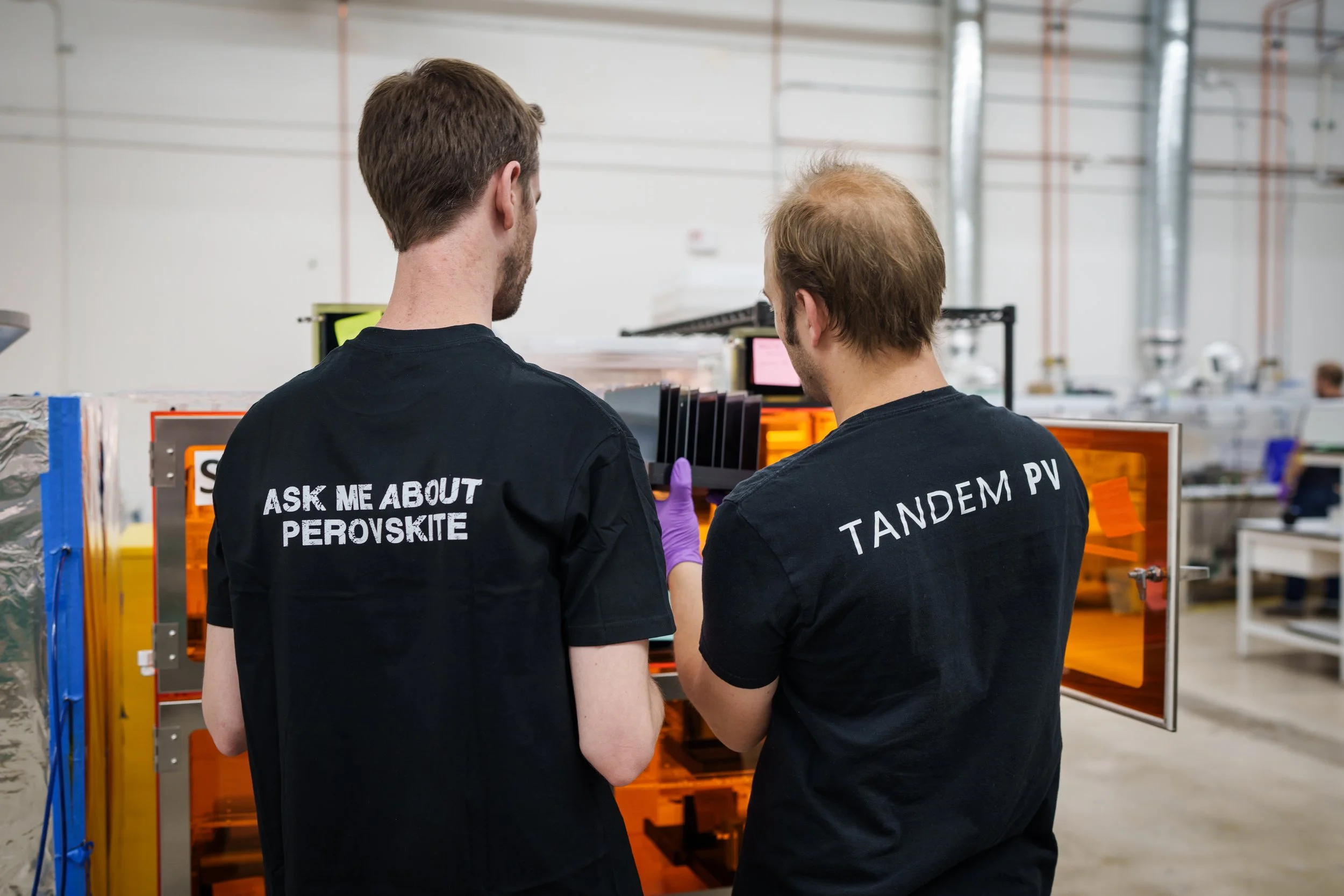
All photos from Tandem PV’s first demonstration line are courtesy of Tandem PV.
One potential solution to push solar efficiency beyond the current limit is two-layer “tandem” solar panels that couple a layer of perovskite—an earth-abundant class of materials that absorb solar energy—to the standard silicon material. Tandem PV (TPV) is a leader in this novel tandem solar panel technology, and after years of research and development (R&D), the company is close to commercializing its panels that have demonstrated a dramatic efficiency improvement compared to best-in-class silicon panels sold today.

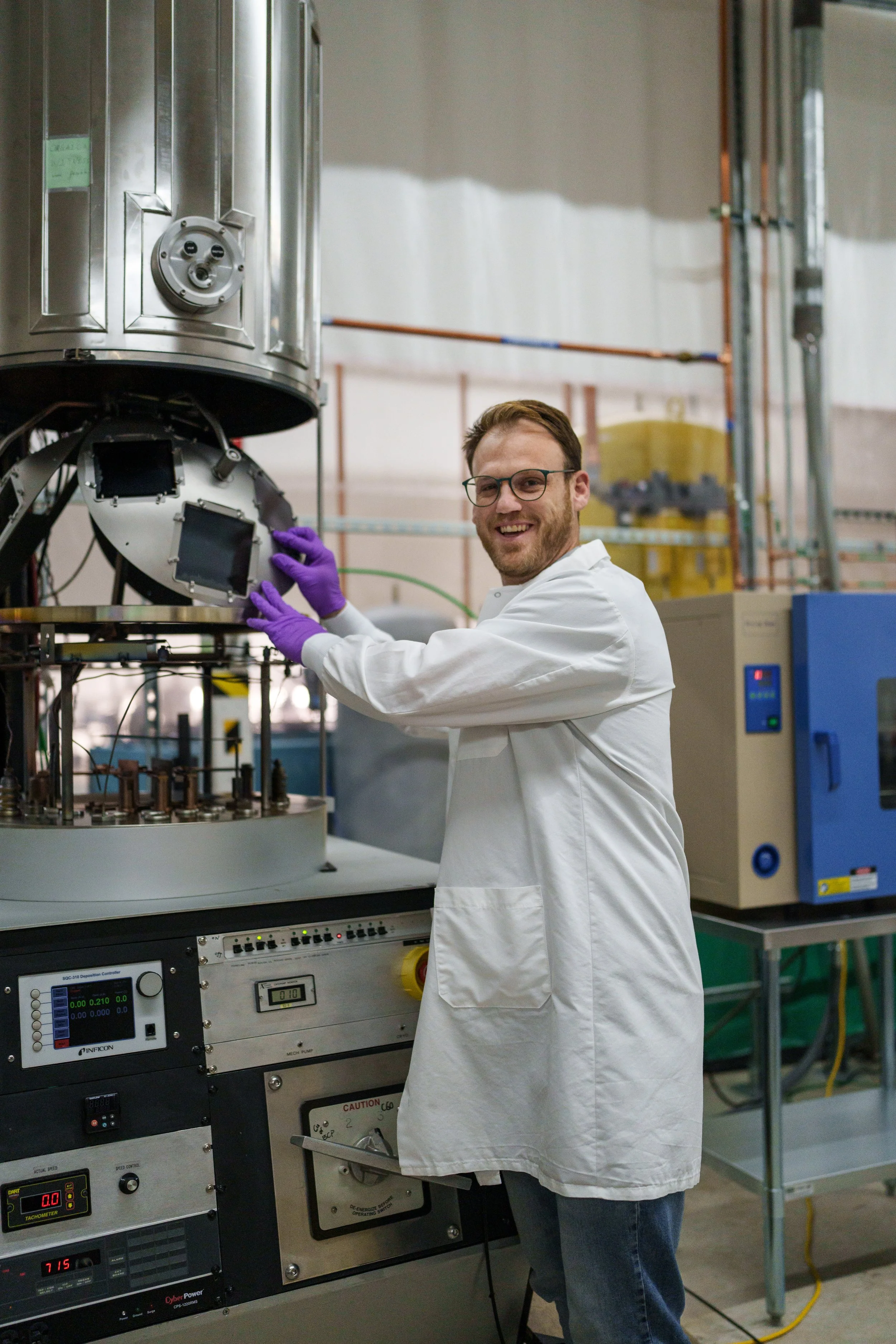
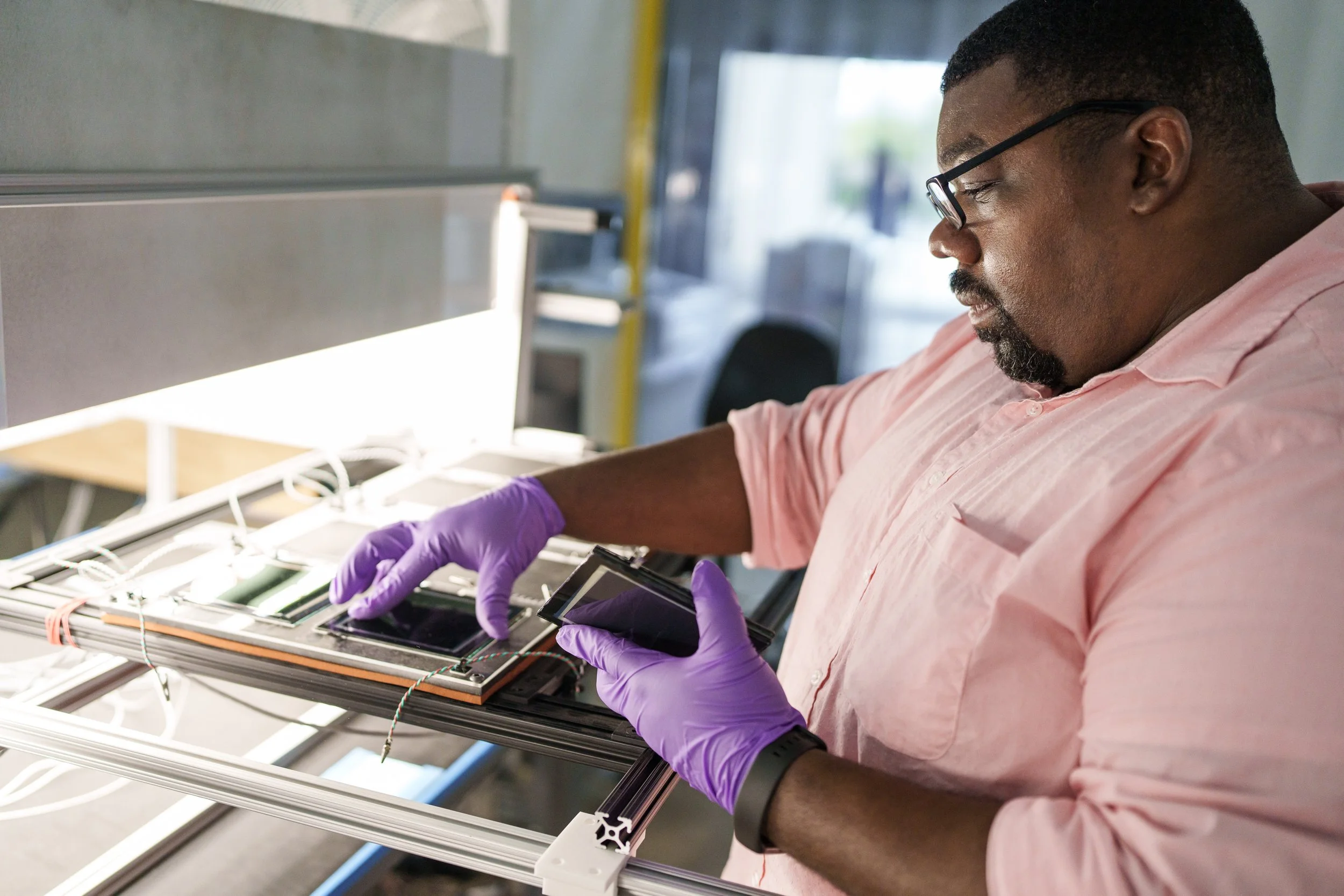

Tandem PV is constructing its first-of-a-kind demonstration line in Silicon Valley to produce its first commercial panels. The plant will help the company retire scaling risks before it pursues high-volume production. The demonstration line will also help the company obtain key commercial certifications, fulfill initial customer demand, and build market confidence in its product.
Trellis’ catalytic equity investment was part of Tandem PV’s larger $50M fundraise that included equity and debt. Trellis’ impact diligence determined that TPV’s panels have the potential to significantly reduce greenhouse gas emissions through 2050. Our additionality assessment concluded that TPV’s project demonstrated a clear need for catalytic capital.
Mobilizing Philanthropic Capital
Across these investments, Trellis convened capital from nearly 20 philanthropic partners across a range of organizations, including private foundations, donor-advised funds, and family offices. This diverse group of donors was made possible by Trellis and Prime’s innovative model that provides partners with the options for capital recovery through recoverable grants and program related investments, as well as traditional granting options. The Trellis team’s careful curation and management of these two opportunities mark a new chapter for Prime’s pioneering, best-in-class approach to bringing philanthropists together to have an outsize impact on the scaling journeys for critical climate solutions.
If you’d like to learn more about how Trellis Climate is deploying catalytic capital into climate infrastructure or to discuss partnership opportunities, reach out to Lara Pierpoint, Managing Director of Trellis Climate, at lara@primecoalition.org.