
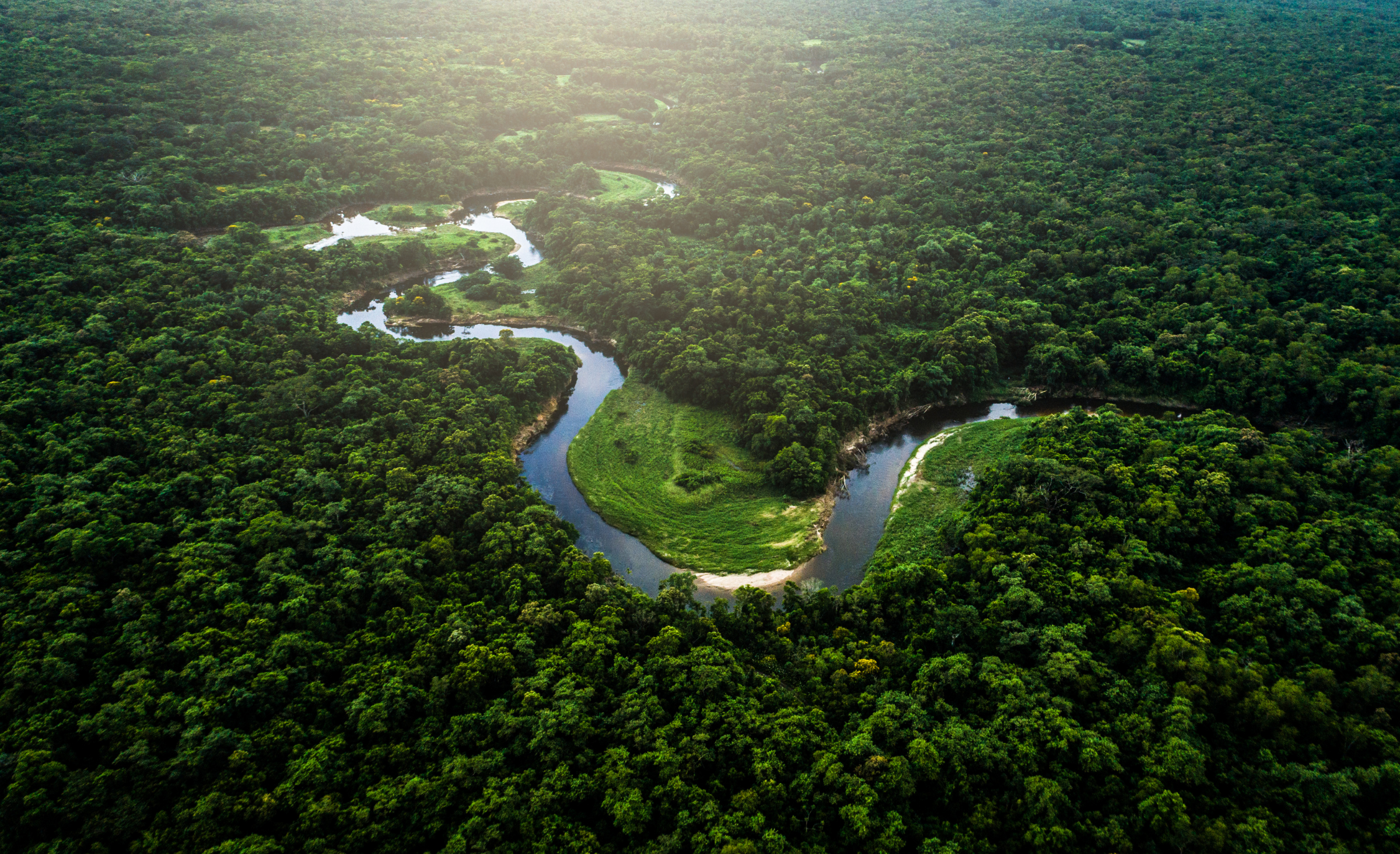
Latin America & Caribbean (LAC) Land & Forest System
As part of Prime’s expanded strategy to support best-in-class catalytic climate investments, we are taking a systemic approach to bridging capital gaps for climate solutions around the world. Our programming proceeds through three phases: Prioritize among the urgent needs for climate action around the globe, Understand how capital could help transform a high-priority system, and Act to create a world in which humanity thrives.
In Land & Forest systems in Latin America and the Caribbean (LAC), Prime seeks to orchestrate financial capital suitable for a portfolio of interventions that can trigger mutually reinforcing ripple effects for a climate-resilient future.
Our approach is made possible by the domain expertise and stakeholder network of many collaborators who work in the region., especially our partners.
1
2
3
4
5
6
We are also grateful for input in the process from:
This research brief summarizes Prime’s view of the outsized impact LAC Land & Forest systems have on global climate health, the interventions needed to protect and restore the system, and the role catalytic capital can play in funding solutions.
Research Brief
Key Takeaways
1
Land & Forest systems in Latin America and the Caribbean are critical to global climate health, but face precarity without additional intervention.
Land & Forest systems in Latin America and the Caribbean are critical to global climate health due to the region’s carbon biomass and terrestrial biodiversity. However, current systems encourage a cycle of deforestation, leading to increased emissions and worsening effects of climate change, negatively impacting human wellbeing. These negative impacts are amplified by current financing dynamics, which encourage increased agricultural land expansion and are unable to support much-needed climate interventions.
2
A community-led forest economy, supported by increased infrastructure and finance redirected away from expansion-enabling production, strengthens LAC’s ability to mitigate and adapt to climate change.
A series of interconnected, strategic interventions hold the potential to transform Latin America and the Caribbean’s Land & Forest Systems. By developing and maintaining community-led forest economies, through strengthened forest monitoring and governance, and redirecting finance away from expansion-enabling production, barriers to participation in deforestation-free supply chains and transition into integrated tree-livestock-crop productive systems are reduced.
3
Risk-tolerant, flexible catalytic capital is needed to bridge barriers that inhibit climate action, inviting conventional funders to follow.
Currently, public financing accounts for the majority of LAC land and forest system flows. The barriers that block traditional funding mechanisms—from land tenure ambiguity to high volatility in production, exacerbated by climate change—may be bridged by capital that is able to take on additional risk. In addition, catalytic capital’s flexibility on timelines and returns make it especially well-suited for catalyzing climate action in the region. as the elevated risk implicit in deploying capital in Latin America and the Caribbean Land & Forest Systems and high initial costs block much-needed interventions from taking shape.
4
Strategic catalytic investments across LAC’s bioeconomies rooted in supporting nature-based solutions and producers that are overlooked by conventional funding mechanisms can unlock critical system-wide impact.
Deploying catalytic capital strategically across various segments of LAC’s bieconomies agroforest industry, from unlocking public financing to uplifting SMEs, cooperatives, smallholder farmers, and other innovators enables nature-based solutions to take flight. This enables the solutions to scale, provides the foundations for projects to exist, and, importantly, builds the track record and derisks investment capital that would otherwise not participate.
Land & Forests in LAC as a “Hotspot” for Climate Action
Land & Forest systems in Latin America and the Caribbean (LAC) hold an outsized role in global climate health. With well-run, supported, and sustainable interventions, this system holds the potential to contribute to important climate change mitigation—it currently accounts for approximately 49% of the world’s tropical biomass carbon stock, estimated to be 247 GT C—and biodiversity, holding about 60% of the world’s biodiversity.
However, destructive dynamics at play within this system have led to a tipping point. Between 2001 and 2025, the region lost 132 million hectares of tree cover, or about 14 percent of the region’s total tree cover. That is due in part to productive systems that prioritize expansion and perpetuate land tenure ambiguity.
We aim to understand the dynamics that harm the system’s ability to contribute to climate change mitigation, climate adaptation, and human thriving so that we may shift from a vicious cycle toward a virtuous cycle: functioning forests, stabilizing climates, and thriving communities.
Climate Change Mitigation
Agriculture and land use account for 55% of LAC's greenhouse gas emissions, while deforestation driven by agriculture is pushing the Amazon toward a biome tipping point.
These compounding destructive dynamics are expected to intensify the effects of climate change: increased greenhouse gas accumulation and forest degradation and deforestation engage in a destructive cycle. Without these important carbon sinks, the region will see increased emissions and reduced ability to mitigate further, as increased extreme weather events such as wildfires and droughts contribute to even further land deterioration.
Climate Adaptation & Resilience
The critical combination of increased deforestation and accelerated greenhouse gas emissions leads to a number of effects that inhibit adequate climate adaptation. These include increased rates of species extinction, more frequent droughts and wildfires that affect local infrastructure, and lower agricultural yields and productivity. As these changes occur with increased frequency and intensity, the region’s ability to adapt becomes compromised.
Human Thriving
The effects described above have unquestionable impacts on elements that affect all living beings’ ability to thrive on planet Earth. Inability to adapt to climate hazards like drought, floods and wildfire, heatwaves exacerbated by forest loss, and loss of forest-based livelihoods can force human relocation, which has subsequent impacts on livelihood security and economic wellbeing.
Theory of Transformation
Large-scale systemic changes are needed to replace destructive dynamics in LAC Land & Forest systems. In concert, these changes will result in a community-led forest economy, supported by increased climate-resilient infrastructure and finance redirected away from expansion-enabling production.
To reach this vision for system transformation, we see a set of leverage areas described below where interventions can create mutually reinforcing ripple effects. Because the elements of the system are inherently interconnected and interdependent, many of the solutions with positive impact in one leverage area may also result in benefits in others.
Together with partners, Prime Coalition will help orchestrate capital flow to these priorities.
Leverage Areas
Address the enforcement gap to slow deforestation
Two leverage areas, working in tandem, have the ability to address illegal clearing causing deforestation in the region. By resolving land tenure ambiguity, communities may unlock carbon finance, which requires clear, uncontested tenure as a precondition for project registration. This, coupled with streamlined real-time forest monitoring infrastructure, transforms forests into resilient, community-governed conservation hubs.
Examples of solutions can include geospatial land mapping, community forest monitoring, specialized smallholder legal aid, satellite deforestation alert systems, and forest degradation monitoring.
Leverage Area 1: Strengthen Land Tenure Security & Collective Governance Capacity
Leverage Area 2: Streamline Real-Time Forest Monitoring Infrastructure
Redirect financing away from conventional production
If agricultural subsidies and private financing can be redirected away from conventional expansion-enabling production, then climate-harming systems will have less structural economic advantage. This would accelerate the spread of deforestation-free sourcing policies, ultimately eliminating the implicit subsidies that advantage conventional systems.
Examples of solutions can include financial mechanisms that align financial incentives with sustainable, forest-positive practices. These include, but are not limited to: sustainability-linked interest loans, silvopasture finance systems, deforestation-free supply finance, regenerative bio-input production, and forestry certification services.
Leverage Area 3: Redirect Agricultural Subsidies and Private Financing away from Conventional Expansion-enabling Production
Reduce barriers to participation in sustainable production
To create change, we must address the dynamics standing in the way of a transition to a deforestation-free economy. Sustainable production must become economically and technically accessible. Smallholders must be able to participate in the deforestation-free supply chain, instead of being pushed into informal, unregulated markets. The cost and knowledge barriers to producing through integrated tree-livestock-crop systems like agroforestry and silvopasture must come down. Once those transition barriers are bridged, integrated systems will achieve superior profitability and unit-cost convergence, creating a permanent incentive for producers to adopt sustainable practices.
Examples of solutions can include efforts to provide resources for communities to shift toward more sustainable practices, including smallholder cooperative alliance hubs, inclusive offtake agreements, expansion of NTFP value chain infrastructure, community enterprise incubators, and specialized extension services.
Leverage Area 4: Enable Smallholder Participation in Deforestation-Free Supply Chain
Leverage Area 5: Lower Transition Barriers toward Integrated Tree-livestock-crop Productive Systems
Develop and maintain community-led forest economies
The economic value of standing forests needs to be raised until they outcompete cleared land. Conservation can be made more profitable than land conversion through two avenues: non-timber forest products (NTFP) and the carbon market. Together, these markets can ensure sustainable land use and resilient incomes, achieving community-led forest stewardship, unlocking sustained finance and equitable compensation, and ultimately reducing financial barriers to preservation.
Examples of solutions can include jurisdictional carbon credits, geographic indication systems, jurisdictional carbon alignment, and territorial management training.
Leverage Area 6: Develop Community-Led Non-Timber Forest Products (NTFP) Value Chain
Leverage Area 7: Maintain a Robust and Fair Carbon Market
Build resilient infrastructure
Systemic change requires protecting all the gains against climate-driven catastrophic loss achieved through the other leverage areas above. Resilient infrastructure can stop the degradation feedback loop caused by understory desiccation and loss of humidity-buffering capacity. It can also stop the productivity decline feedback loop that drives further deforestation, preventing additional land conversion and worsening climate conditions.
Examples of solutions can include water retention infrastructure, community fire management training, drought-resilient agriculture, and landscape firebreak infrastructure.
Leverage Area 8: Build Drought- and Fire- Responsive and Resilient Infrastructure

Current Capital Gaps
From the top-down view, Climate Policy Initiative (CPI) estimates that the cost of building climate resilience into Latin America and the Caribbean (LAC) agrifood systems is $160 billion a year until 2050, roughly 27 times current levels. Of that amount, an estimated $49 billion a year is required to combat desertification, land degradation and drought, while over $25 billion a year is needed to transform livestock systems.
Right now, just a fraction of that is being deployed, and largely through public means. Public financing accounted for 99% of tracked Land & Forest systems flows in 2024, largely via subsidized credit lines and public project debt by way of multilateral and national development banks, and DFIs.
When producers are able to access financing, it is expensive, with credit rates between four and eight times that in the Global North, which can act as a deterrent to a transition that pays back over five to eight years.
Capital Coverage
In collaboration with the Mútua platform, a São Paulo-based impact intelligence tool that maps organizations against a given theory of change, value chain or territory, we tracked the investment capital deployed to each leverage area listed above over the past 5 years. We calculated the ratio of the cumulated deployed capital and the absorptive capacity as a proxy for how severe the gap is for the specific leverage area. Directionally, the lower the coverage, the larger the gap.
We have found that all eight leverage areas are significantly underfunded, with capital coverage ranging from 2% to 55%. This points to an immense opportunity for impact if we can address the specific barriers to investment using catalytic capital and other non-investment interventions.
Barriers to Investment
To unlock investment flow, we’ve identified 18 common barriers to investment in the market today, based on over 60 conversations with funds, investors, financial institutions, and the organizations seeking their capital.
Guided by these conversations and aligned with the Catalytic Capital Consortium’s research on Addressing Capital Gaps, we group the common barriers into the 6 general categories below. Some barriers are specific to one leverage area, while others are cross-cutting.

-
Land tenure ambiguity blocks underwriting
Local-currency exposure for non-export products
Lack of long term purchase agreements from agricultural commodity buyers
High-volatility in production, amplified by climate change
Feasibility and revenue uncertainty for pre-development stage carbon projects
Regulatory complexity and volatility of carbon market
-
Low to no cash flows for select bioeconomy industries and solutions
Subsidies often make conventional agriculture more financially attractive than sustainable land management
Infrastructure deficit raises baseline cost and risk
Difficult to quantify and pay for loss avoidance
-
Expensive to reach and monitor smaller producers
High due-diligence effort regardless of project deal size
-
Tenor mismatch against long agricultural transition periods
Community pace and ecological cycles versus investor scale expectations
-
No standardized data on nature-centric models
Commodity-linked lending products cannot underwrite diversified systems
Lenders lack the technical expertise to price climate risk in silvopastoral/agroforestry systems
-
Reputation risk of exposure to potentially fraudulent carbon market

Identified Catalytic Investment Strategies
From the top-down view, Climate Policy Initiative (CPI) estimates that the cost of building climate resilience into Latin America and the Caribbean (LAC) agrifood systems is $160 billion a year until 2050, roughly 27 times current levels. Of that amount, an estimated $49 billion a year is required to combat desertification, land degradation and drought, while over $25 billion a year is needed to transform livestock systems.
Right now, just a fraction of that is being deployed, and largely through public means. Public financing accounted for 99% of tracked Land & Forest systems flows in 2024, largely via subsidized credit lines and public project debt by way of multilateral and national development banks, and DFIs.
When producers are able to access financing, it is expensive, with credit rates between four and eight times that in the Global North, which can act as a deterrent to a transition that pays back over five to eight years.
Investment Areas
In collaboration with the Mútua platform, a São Paulo-based impact intelligence tool that maps organizations against a given theory of change, value chain or territory, we tracked the investment capital deployed to each leverage area listed above over the past 5 years. We calculated the ratio of the cumulated deployed capital and the absorptive capacity as a proxy for how severe the gap is for the specific leverage area. Directionally, the lower the coverage, the larger the gap.
We have found that all eight leverage areas are significantly underfunded, with capital coverage ranging from 2% to 55%. This points to an immense opportunity for impact if we can address the specific barriers to investment using catalytic capital and other non-investment interventions.
1
Early-Stage Nature Project Development
To unlock investment flow, we’ve identified 18 common barriers to investment in the market today, based on over 60 conversations with funds, investors, financial institutions, and the organizations seeking their capital.
Guided by these conversations and aligned with the Catalytic Capital Consortium’s research on Addressing Capital Gaps, we group the common barriers into the 6 general categories below. Some barriers are specific to one leverage area, while others are cross-cutting.
2
-
1. Strengthen Land Tenure Security & Collective Governance Capacity
2. Streamline Real-Time Forest Monitoring Infrastructure
3. Redirect Agricultural Subsidies and Private Financing away from Conventional Expansion-enabling Production
5. Lower Transition Barriers toward Integrated Tree-livestock-crop Productive Systems
6. Develop Community-Led Non-Timber Forest Products (NTFP) Value Chain
7. Maintain a Robust and Fair Carbon Market
Transition Finance for Bioeconomy Value Chain Producers & SMEs
To unlock investment flow, we’ve identified 18 common barriers to investment in the market today, based on over 60 conversations with funds, investors, financial institutions, and the organizations seeking their capital.
Guided by these conversations and aligned with the Catalytic Capital Consortium’s research on Addressing Capital Gaps, we group the common barriers into the 6 general categories below. Some barriers are specific to one leverage area, while others are cross-cutting.
4
-
3. Redirect Agricultural Subsidies and Private Financing away from Conventional Expansion-enabling Production
4. Enable Smallholder Participation in Deforestation-Free Supply Chain
5. Lower Transition Barriers toward Integrated Tree-livestock-crop Productive Systems
6. Develop Community-Led Non-Timber Forest Products (NTFP) Value Chain
8. Build Drought- and Fire- Responsive and Resilient Infrastructure
Nature Tech & Bioeconomy Innovation
To unlock investment flow, we’ve identified 18 common barriers to investment in the market today, based on over 60 conversations with funds, investors, financial institutions, and the organizations seeking their capital.
Guided by these conversations and aligned with the Catalytic Capital Consortium’s research on Addressing Capital Gaps, we group the common barriers into the 6 general categories below. Some barriers are specific to one leverage area, while others are cross-cutting.
-
2. Streamline Real-Time Forest Monitoring Infrastructure
4. Enable Smallholder Participation in Deforestation-Free Supply Chain
5. Lower Transition Barriers toward Integrated Tree-livestock-crop Productive Systems
7. Maintain a Robust and Fair Carbon Market
8. Build Drought- and Fire- Responsive and Resilient Infrastructure
Unblocking Institutional Capital at Scale
Guided by these conversations and aligned with the Catalytic Capital Consortium’s research on Addressing Capital Gaps, we group the common barriers into the 6 general categories below. Some barriers are specific to one leverage area, while others are cross-cutting.
-
3. Redirect Agricultural Subsidies and Private Financing away from Conventional Expansion-enabling Production
4. Enable Smallholder Participation in Deforestation-Free Supply Chain
5. Lower Transition Barriers toward Integrated Tree-livestock-crop Productive Systems
7. Maintain a Robust and Fair Carbon Market
8. Build Drought- and Fire- Responsive and Resilient Infrastructure
3

Additional Reading
To learn more about Prime’s LAC Land & Forest systems mapping research, please consult the following resources.
-
Aguiar, S., Mastrángelo, M. E., Brancalion, P. H. S., & Meli, P. (2021). Transformative governance for linking forest and landscape restoration to human well-being in Latin America. Ecosystems and People, 17(1), 523–538.
Amazon Investor Coalition & LACLIMA (2025). Sustainable Investments in the Amazon.
Amazonas State Government (2022). Socio-environmental safeguards of the Amazonas REDD+ System.
Assunção, J., Gandour, C., & Rocha, R. (2015). DETERring Deforestation in the Brazilian Amazon: Environmental Monitoring and Law Enforcement. Climate Policy Initiative / PUC-Rio.
Baragwanath, K., & Bayi, E. (2020). Collective property rights reduce deforestation in the Brazilian Amazon. PNAS, 117(34), 20495–20502.
Blackman, A. (ed.) (2020). Latin American and Caribbean Forests in the 2020s: Trends, Challenges, and Opportunities. IDB.
Borras, S. M., Hall, R., Scoones, I., White, B., & Wolford, W. (2011). Towards a better understanding of global land grabbing. Journal of Peasant Studies, 38(2), 209–216.
Boulton, C. A., Lenton, T. M., & Boers, N. (2022). Pronounced loss of Amazon rainforest resilience since the early 2000s. Nature Climate Change, 12(3), 271–278.
CAF, IC-VCM, VCMI & IIF (2023). High-integrity Voluntary Carbon Markets in the Global South.
CAF / ILACC (2025). Carbon Market Observatory Bulletin No. 6.
Castle, S. E., Miller, D. C., Mbow, C., Ordonez, J. C., Sinare, H., & Sinclair, F. (2021). Agroforestry adoption and household welfare in low- and middle-income countries. Campbell Systematic Reviews, 17, e1175.
Chará, J., Murgueitio, E., et al. (2023). Silvopastoral Systems in Colombia: From Pilot Farms to NDCs. In Silvopastoral Systems for Sustainable Livestock Production. Springer.
Chiriacò, M. V., Dămătîrcă, C., Abd Alla, S., et al. (2025). A catalogue of land-based adaptation and mitigation solutions. Scientific Data, 12, 166.
Climate Policy Initiative (2024). Global Landscape of Climate Finance 2024.
Climate Policy Initiative (2021). Cattle Ranching and Land Prices in the Brazilian Amazon.
Curtis, P. G., Slay, C. M., Harris, N. L., Tyukavina, A., & Hansen, M. C. (2018). Classifying drivers of global forest loss. Science, 361(6407), 1108–1111.
Demarchi, G., Carrilho, C. D., Catry, T., Atmadja, S., & Subervie, J. (2022). Beyond reducing deforestation. HAL Working Paper hal-03778384. INRAE.
Deutloff, J., Held, H., & Lenton, T. M. (2025). High probability of triggering climate tipping points under current policies. Earth System Dynamics, 16, 565–583.
Ecosystem Marketplace / Forest Trends (2024). State of the Voluntary Carbon Market 2024.
FAO (2023). The State of Food and Agriculture 2023.
FAO (2023). The Status of Land Tenure and Governance.
FAO (2021). Land governance in Latin America and the Caribbean.
FAO & FILAC (2021). Forest governance by indigenous and tribal peoples.
Flores, B. M., Montoya, E., Sakschewski, B., et al. (2024). Critical transitions in the Amazon forest system. Nature, 626, 555–564.
FOLU (2019). Growing Better: Ten Critical Transitions to Transform Food and Land Use.
Forest Declaration Assessment (2024). Forests Under Fire.
Forest Declaration Assessment (2025). Forest Declaration Assessment 2025.
Fu, R., Yin, L., Li, W., et al. (2013). Increased dry-season length over southern Amazonia in recent decades. PNAS, 110(45), 18110–18115.
Gnych, S., Lawry, S., McLain, R., Monterroso, I., & Adhikary, A. (2020). Is community tenure facilitating investment in the commons? Forest Policy and Economics, 111, 102088.
IPBES (2019). Global Assessment Report on Biodiversity and Ecosystem Services.
IPCC (2022). Sixth Assessment Report, WGII.
Larson, A. M., Monterroso, I., Liswanti, N., & Tamara, A. (2023). What is forest tenure (in)security? Forest Policy and Economics, 147, 102880.
Lapola, D. M., Pinho, P., Barlow, J., et al. (2023). The drivers and impacts of Amazon forest degradation. Science, 379(6630), eabp8622.
Liang, J., Crowther, T. W., et al. (2016). Positive biodiversity-productivity relationship predominant in global forests. Science, 354(6309), aaf8957.
OECD (2023). Agricultural Support Estimates.
Ortiz-Bobea, A., Ault, T. R., Carrillo, C. M., Chambers, R. G., & Lobell, D. B. (2021). Anthropogenic climate change has slowed global agricultural productivity growth. Nature Climate Change, 11(4), 306–312.
Prindex (2024). Prindex Comparative Report 2024.
Putz, F. E., Zuidema, P. A., Synnott, T., et al. (2012). Sustaining conservation values in selectively logged tropical forests. Conservation Letters, 5(4), 296–303.
Saatchi, S. S., Harris, N. L., Brown, S., et al. (2011). Benchmark map of forest carbon stocks in tropical regions across three continents. PNAS, 108(24), 9899–9904.
Science Panel for the Amazon (2021). Amazon Assessment Report 2021.
Somarriba, E., Beer, J., et al. (2012). Traditional shade-cocoa agroforestry systems. In Nair & Garrity (eds), Agroforestry: The Future of Global Land Use.
Staal, A., Flores, B. M., Aguiar, A. P. D., et al. (2018). Forest-rainfall cascades buffer against drought across the Amazon. Nature Climate Change, 8(6), 539–543.
Stuart, S. N., Chanson, J. S., Cox, N. A., et al. (2004). Status and trends of amphibian declines and extinctions worldwide. Science, 306(5702), 1783–1786.
WEF (2023). Global Risks Report 2023.
World Bank (2025). Carbon Markets in Latin America and the Caribbean.
Bento, N., et al. (2024). The status of forest carbon markets in Latin America. Journal of Environmental Management.
WRI / Global Forest Watch (2025). Fires Drove Record-breaking Tropical Forest Loss in 2024.
WWF / Food Forward NDCs (2024). Implementing Silvopastoral and Agroforestry Systems: Technical Guidance.
WRI (2019). Creating a Sustainable Food Future.