Ebb Carbon is Demonstrating First-of-a-Kind Technology to Remove CO₂ by Harnessing Ocean Chemistry
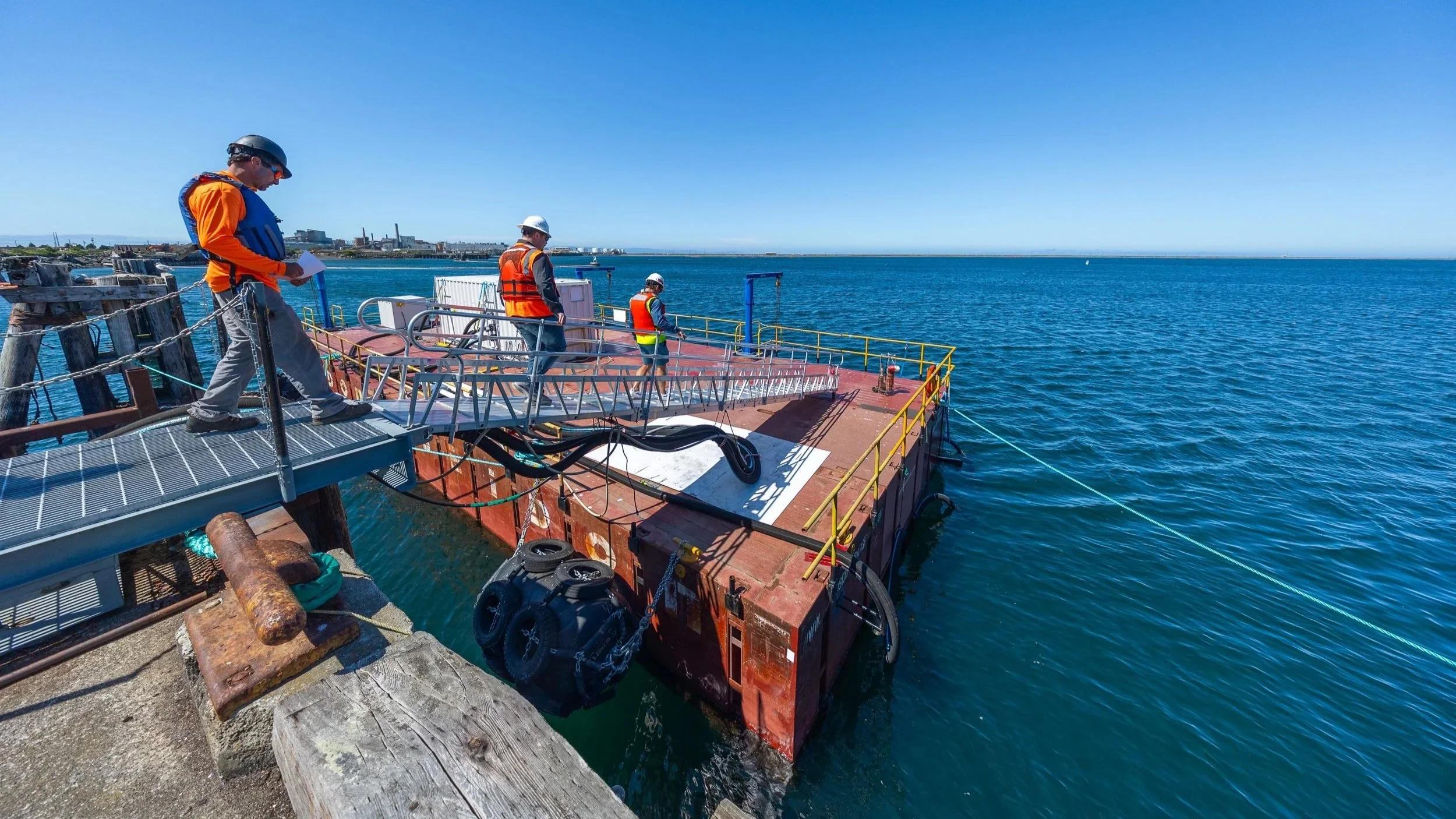
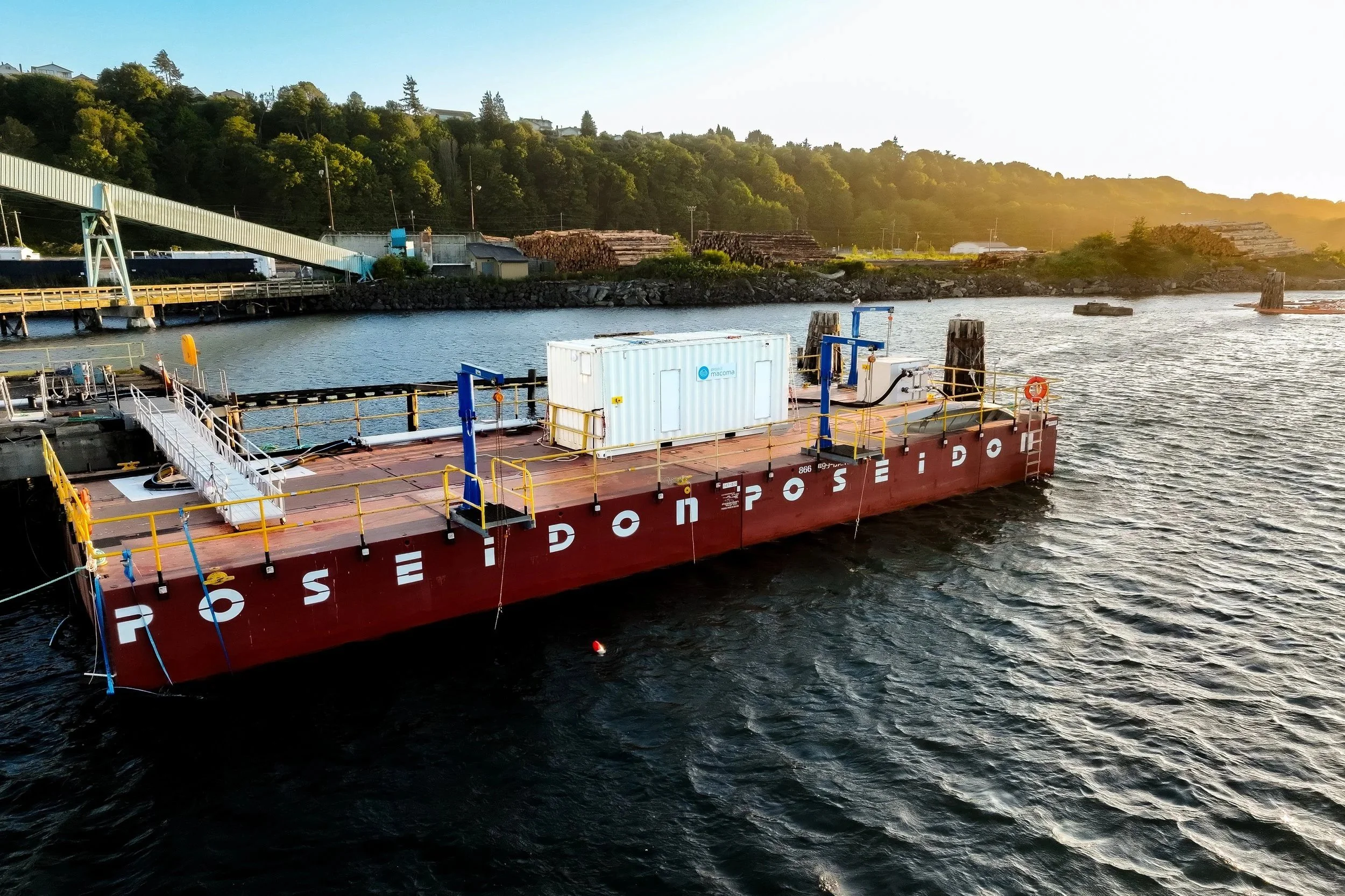
All photos of their first-of-a-kind pilot facility are courtesy of Ebb Carbon.
Ebb Carbon is developing a new pathway for large-scale, durable carbon removal that strengthens ocean health. As one of Trellis Climate’s syndicated investments, Ebb illustrates how catalytic capital can help pioneering climate technologies progress from promising lab results to real-world deployment.
Other carbon capture technologies capture carbon as a gas, which then has to be injected underground for storage. Ebb uses an alternative approach that permanently stores carbon in the ocean in a way that helps counter ocean acidification and avoids many of the uncertainties and concerns facing underground storage. So Ebb is doing carbon capture in a way that’s better for the environment and communities.
A First-of-a-Kind Milestone
In 2025, Ebb began operations at its first-of-a-kind pilot facility in Port Angeles, Washington, which was a major step toward validating its electrochemical ocean alkalinity enhancement system outside of controlled research settings. This deployment builds on two years of fieldwork and research at the Department of Energy’s Pacific Northwest National Laboratory (PNNL) in Sequim.
Trellis Climate’s early syndicated investment supported some of the engineering and project development work that helped Ebb lay the groundwork for siting and preparing this facility. These early activities, which are often underfunded and difficult to finance with commercial investment alone, are essential for companies working toward their first demonstration plant. Since its launch in 2024, Trellis has syndicated >$3M for catalytic investments in four companies bridging the scale-up gap. Their first tranche of investments in Ample Carbon and Ebb Carbon supported these companies in conducting critical project development work, including engineering and feasibility studies.
With the pilot now online, Ebb can begin generating real-world operating data, informing permitting pathways, strengthening stakeholder confidence, and refining the models that will guide future scale-up.
Building the Foundation for Safe Deployment
Ebb’s approach is grounded in rigorous scientific research, including multiple peer-reviewed studies generated through its collaboration with PNNL. Their work to date has explored how alkalinity-enhanced seawater disperses in marine environments, the resilience of local species, and how to build an effective measurement, monitoring, and verification toolkit. Their growing research portfolio provides an evidence-based foundation for safe operation and helps regulators, communities, and partners understand what responsible marine carbon removal can look like today. Ebb Carbon states that their recent study “documents two controlled releases of alkaline-enhanced seawater into Sequim Bay” and demonstrates their solution is both safe for marine environments and effective at removing carbon.
This science-centered approach is central to Ebb’s model: improving ocean chemistry, enabling atmospheric CO₂ removal, and supporting coastal ecosystems in places already experiencing the impacts of acidification.
Local Partnerships
A key to Ebb Carbon’s success has been its commitment to local partnerships, including:
Working with the Lower Elwha Klallam Tribe to study juvenile salmon populations to ensure safe operating bounds
Partnering with the Feiro Marine Center in Port Angeles, WA, on educational resources on ocean acidification and marine carbon dioxide removal
Creating 35 local jobs during construction and three long-term hires from the community
Why Philanthropists Matter at This Stage
Scaling breakthrough climate technologies to commercial impact is rarely straightforward. Early-stage companies are typically required to develop first-of-a-kind plants to validate their approach and demonstrate real-world results. These initial deployments can cost tens to hundreds of millions of dollars and carry uncertain financial returns, making them too costly for venture capital and too risky for traditional infrastructure finance. Yet without these critical steps, technologies that could deliver substantial emissions reductions struggle to progress beyond pilot or lab-scale demonstrations.
Trellis Climate addresses this gap by providing impact-first, risk-tolerant capital for early-stage climate projects. By leveraging philanthropy to crowd in additional commercial capital, Trellis accelerates the deployment of early projects that are essential for commercial scale but difficult to fund. Ebb Carbon exemplifies this approach: Trellis’ development capital helped fund the early engineering and project planning that made their first-of-a-kind pilot in Port Angeles possible, bridging the gap from promising technology to real-world demonstration.
Philanthropy Can Unlock Early-Stage Climate Innovation
Ebb’s first-of-a-kind pilot is more than a technical milestone; it shows how durable carbon removal and ocean health can advance, and it signals what becomes possible when science-driven innovation meets aligned philanthropic partnership.
Many philanthropists are open to exploring catalytic investing, but face challenges such as:
limited familiarity with how charitable capital can support market-based solutions,
uncertainty around how to begin evaluating opportunities, and
insufficient in-house capacity to conduct technical diligence, prioritize across systems, or assess additionality.
If you’re interested in partnering with Trellis Climate to accelerate the deployment of first-of-a-kind projects, contact Lara Pierpoint, Managing Director.